
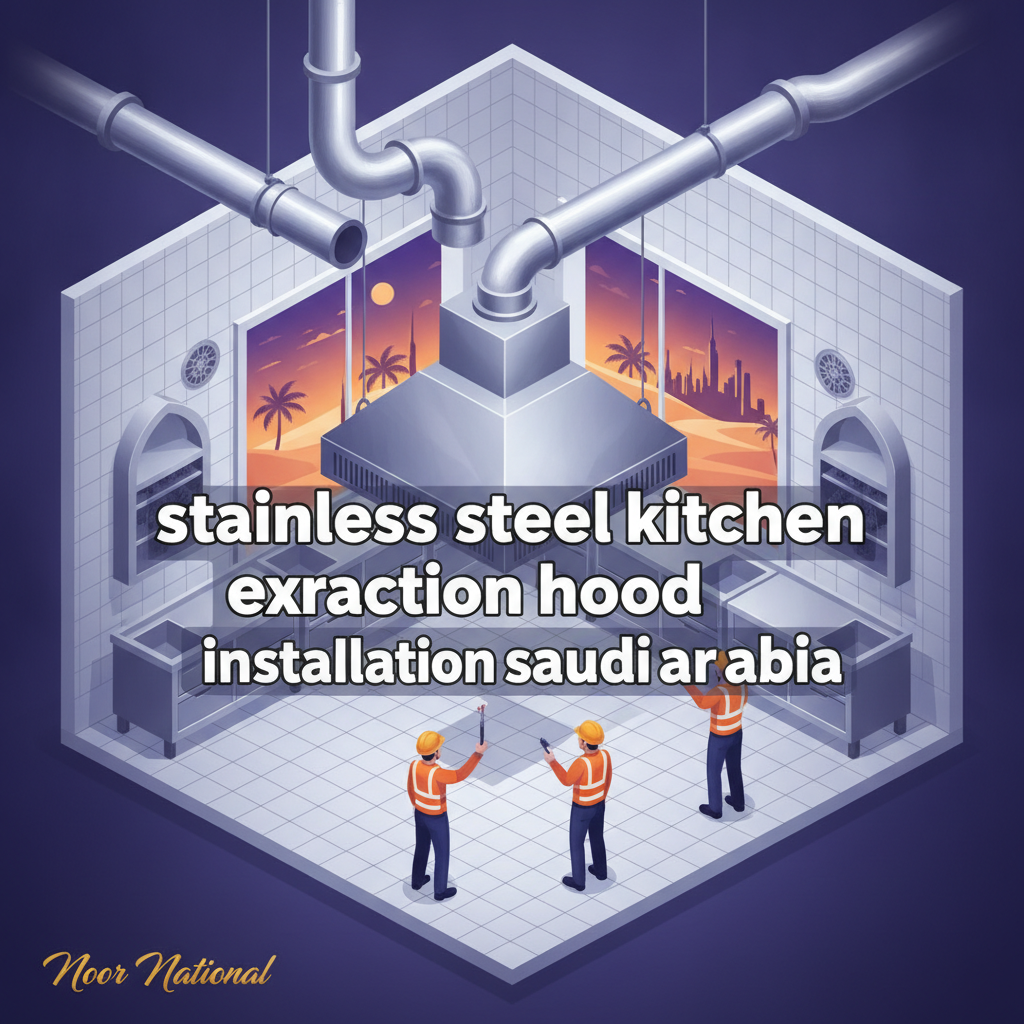
The Cornerstone of a Safe and Efficient Commercial Kitchen in KSA
In Saudi Arabia’s vibrant and demanding culinary landscape, the efficiency and safety of a commercial kitchen are paramount. A critical component underpinning this is a high-performance ventilation system. Therefore, professional stainless steel kitchen extraction hood installation saudi arabia is not merely a choice but a necessity for any serious food service establishment. It ensures the removal of heat, smoke, grease, and airborne particles, creating a safer, cleaner, and more productive working environment for your staff.
An improperly installed hood can lead to significant fire hazards, poor air quality, and non-compliance with local health and safety regulations. Consequently, investing in expert installation from the outset protects your staff, your customers, and your business investment. This guide will walk you through the essential aspects of selecting and installing the perfect stainless steel extraction hood for your kitchen in the Kingdom.
Why Stainless Steel is the Unrivaled Choice for Kitchen Hoods
When it comes to materials for commercial kitchen equipment, stainless steel stands in a class of its own. Its properties make it perfectly suited for the high-stress environment of a busy kitchen, especially in the demanding climate of Saudi Arabia.
Durability and Heat Resistance
Commercial kitchens generate immense heat. Stainless steel possesses exceptional thermal resistance, meaning it will not warp, discolor, or degrade under the high temperatures produced by commercial cooking appliances. Moreover, its inherent strength resists dents and scratches, ensuring a long service life even with heavy daily use.
Superior Hygiene and Ease of Cleaning
Hygiene is non-negotiable in the food industry. Stainless steel features a non-porous surface, which prevents bacteria, mold, and other contaminants from seeping in. This makes it incredibly easy to clean and sanitize, helping your establishment meet the stringent food safety standards across Riyadh, Jeddah, and Dammam.
Corrosion Resistance
Saudi Arabia’s coastal cities, like Jeddah and Dammam, have humid, saline air that can accelerate corrosion in lesser materials. High-grade stainless steel offers excellent resistance to rust and corrosion. This ensures your investment remains functional and maintains its professional appearance for years to come.
Professional Aesthetic
Beyond its functional benefits, stainless steel provides a sleek, modern, and professional look. It reflects light, making the kitchen appear brighter and larger. A clean, well-maintained stainless steel kitchen signifies quality and high standards to both staff and inspectors.
The Critical Importance of Professional Installation
Purchasing a top-quality stainless steel hood is only half the battle; its performance is entirely dependent on the quality of the installation. A flawed setup can lead to a host of problems, undermining the very purpose of the ventilation system.
- Fire Safety: The primary role of an extraction hood is to capture and vent grease-laden vapors. Improper installation can lead to grease accumulation in ducts, creating a severe fire hazard. Professional installers ensure all connections are sealed and the system is designed to minimize risk.
- Regulatory Compliance: Municipalities and Civil Defense authorities in Saudi Arabia have specific codes and standards for commercial kitchen ventilation. Professional installation ensures your system is fully compliant, helping you avoid fines, forced closures, and liability issues.
- Optimal Performance: The effectiveness of a hood is measured by its ability to capture and exhaust contaminants. Experts calculate the correct hood size, overhang, and airflow (CFM – Cubic Feet per Minute) required for your specific cooking equipment, ensuring maximum efficiency.
- Energy Efficiency: A well-designed and properly installed system operates more efficiently. It removes contaminated air without excessively taxing your HVAC system, leading to lower energy consumption and reduced operational costs over time.
Key Factors for Stainless Steel Kitchen Extraction Hood Installation in Saudi Arabia
Planning is crucial for a successful installation. Before the work begins, several factors must be carefully considered to ensure the system meets your kitchen’s specific needs and complies with all regulations.
1. Sizing and Hood Type
The size of the hood is determined by the cooking appliances it will cover. It must overhang the equipment on all sides to effectively capture heat and smoke. Common types include:
- Wall-Mounted Canopy Hoods: Installed against a wall over a line of cooking equipment.
- Island Canopy Hoods: Suspended from the ceiling over a central cooking block.
- Proximity Hoods: Low-profile hoods placed closer to the cooking surface.
2. Calculating Airflow Requirements (CFM)
The required power of the exhaust fan, measured in CFM, depends on the type and intensity of cooking. A kitchen with charbroilers and fryers will need a much more powerful system than one used for light baking. A professional installer will perform a detailed calculation to ensure the fan is powerful enough without being wasteful.
3. Ductwork Design and Routing
The ductwork is the pathway that transports the exhausted air outside. Its design is critical for performance. Ducts must be correctly sized, made from appropriate materials (like welded stainless or black steel), and routed with minimal bends to maintain proper airflow and prevent grease buildup. All seams must be liquid-tight.
4. Makeup Air (MUA) Systems
An extraction hood removes a large volume of air from the kitchen. This air must be replaced. A Makeup Air unit brings fresh, often conditioned, air back into the kitchen. This prevents negative air pressure, which can cause poor extraction, back-drafting from other vents, and uncomfortable drafts for staff.
The Professional Installation Process: A Step-by-Step Overview
A systematic approach is key to a successful stainless steel kitchen extraction hood installation in Saudi Arabia. While every project is unique, a professional process generally follows these steps.
- On-Site Consultation and Assessment: Technicians visit your site to analyze the kitchen layout, inspect the cooking equipment, and understand your operational needs.
- System Design and Engineering: Based on the assessment, a detailed plan is created. This includes hood specifications, CFM calculations, ductwork routing, and makeup air requirements, all designed to meet local KSA codes.
- Fabrication: If a custom hood is required, it is fabricated from high-quality stainless steel to the precise specifications of the design plan.
- Secure Mounting: The hood is securely mounted to the wall or ceiling, ensuring it is level and at the correct height above the cooking surfaces. This is a critical structural step.
- Ductwork and Fan Installation: The exhaust fan is installed, typically on the roof, and the ductwork is run from the hood to the fan. All connections are meticulously sealed to prevent leaks.
- Electrical and Fire Suppression Integration: The system is wired, and if applicable, integrated with the kitchen’s fire suppression system. This ensures the exhaust fan and makeup air unit activate or deactivate correctly during a fire event.
- System Testing and Balancing: Finally, the entire system is tested. Airflow is measured and adjusted (balanced) to ensure it meets the design specifications and provides optimal capture and exhaust performance.
Choosing Noor National for Your Kitchen Ventilation Needs
Executing a flawless stainless steel kitchen extraction hood installation in Saudi Arabia requires deep expertise and a commitment to quality. For years, Noor National has been a trusted name in providing comprehensive commercial kitchen solutions across the Kingdom. As detailed on our about us page, our team is dedicated to delivering systems that prioritize safety, efficiency, and compliance.
At noornational.com, we understand the unique challenges of operating a commercial kitchen in the region. We don’t just install equipment; we engineer complete ventilation solutions tailored to your specific needs. Our experience spans a wide range of establishments, from small cafes to large-scale hotel kitchens. We ensure every installation adheres to the highest industry standards and local regulations.
Maintaining Your Stainless Steel Extraction Hood
Proper installation is the first step; consistent maintenance is the key to longevity and sustained performance. Regular upkeep ensures your system operates safely and efficiently.
Regular Cleaning Schedule
- Filters: Baffle filters should be cleaned regularly, often daily or weekly, depending on the type and volume of cooking. Soaking them in a degreasing solution is highly effective.
- Hood Surfaces: Wipe down the interior and exterior of the hood daily with a suitable stainless steel cleaner to prevent grease buildup.
- Ductwork: Professional duct cleaning should be scheduled periodically (e.g., quarterly or semi-annually) to remove accumulated grease, which is a major fire hazard.
Routine System Checks
Inspect the fan belt for wear and tear, listen for unusual noises from the motor, and ensure the makeup air system is functioning correctly. Addressing small issues early can prevent costly breakdowns. Partnering with a reliable service provider like noornational.com for preventative maintenance can provide peace of mind.
Frequently Asked Questions (FAQ)
What size kitchen extraction hood do I need?
The hood should extend beyond the cooking equipment by approximately 15 cm (6 inches) on all open sides. This overhang ensures that heat, steam, and grease-laden vapors are effectively captured as they rise and expand. A professional consultant can determine the exact dimensions needed for your specific appliance lineup.
How often should kitchen hood filters be cleaned?
For high-volume kitchens with fryers and charbroilers, filters should be cleaned daily. For kitchens with moderate use, a weekly cleaning schedule may be sufficient. The key is to never let grease drip from the filters, as this is a clear sign they are overdue for cleaning and present a fire risk.
Why is a Makeup Air (MUA) unit so important?
A kitchen hood exhausts a massive amount of air. Without an MUA unit to replace that air, the kitchen develops negative pressure. This can cause poor hood performance, drafts, doors that are hard to open, and can even pull carbon monoxide back into the building from other appliances. It’s essential for both safety and performance.
Can I install a kitchen hood myself?
Due to the significant fire safety risks, electrical work, and strict regulatory codes involved, a DIY stainless steel kitchen extraction hood installation in Saudi Arabia is strongly discouraged for commercial settings. Professional installation is essential for safety, compliance, and warranty purposes.
Take the Next Step Towards a Safer Kitchen
A professionally installed stainless steel extraction hood is a foundational investment in the safety and success of your food service business. It protects your property, ensures the well-being of your staff, and provides a comfortable environment for creating culinary excellence. Don’t compromise on this critical system.
Ready to ensure your kitchen meets the highest standards of safety and efficiency? The team at Noor National is here to help. For an expert consultation and a quote tailored to your specific needs, please contact us today. Let us help you build a better, safer kitchen environment.
📞 Get in Touch with Noor National
Have questions or need assistance? We’re here to help! Reach out to us through any of the following channels:
- 📱 Phone: +971551409739
- 📧 Email: sales@noornational.com
- 🌐 Website: Contact Us Page